
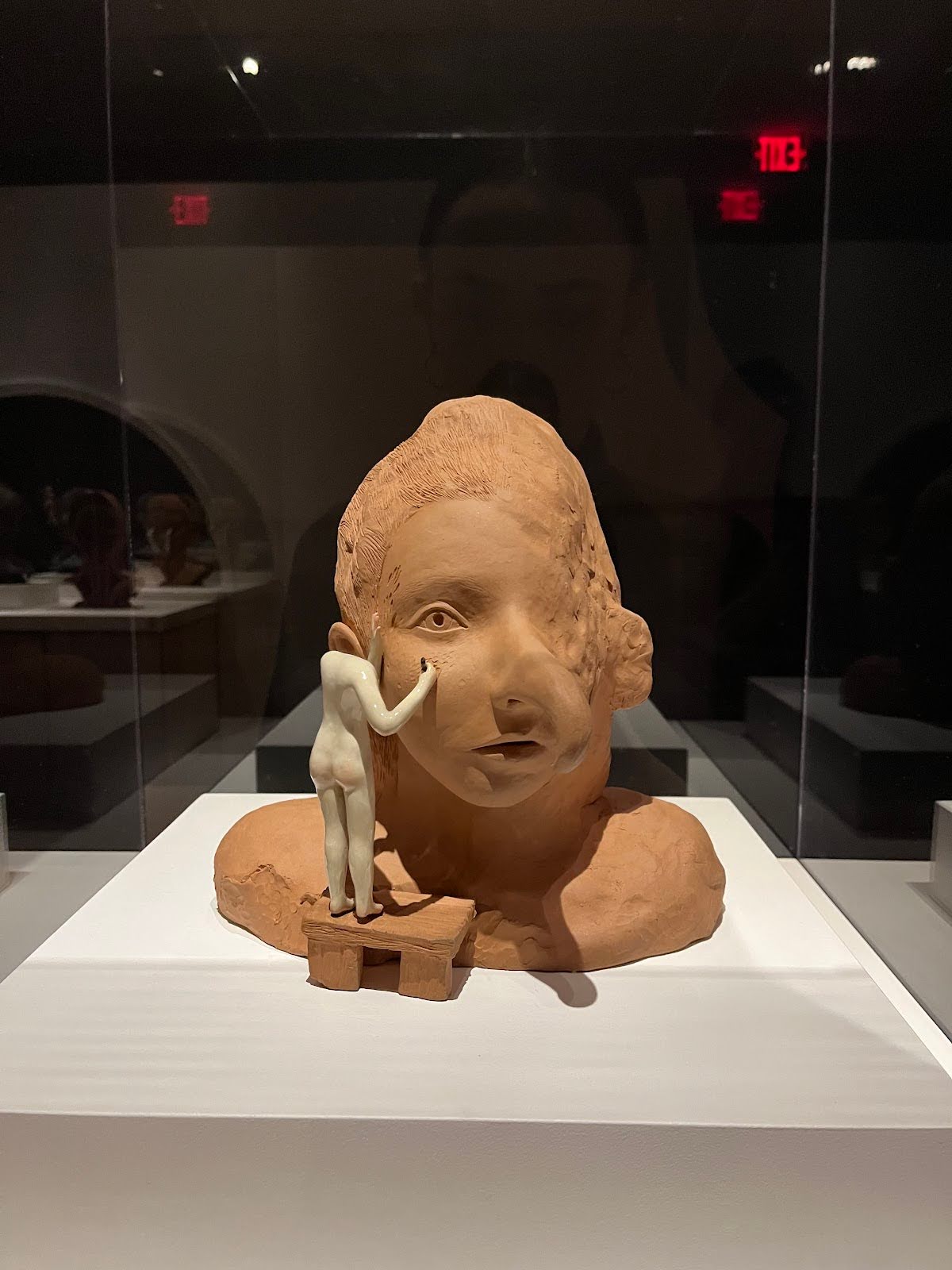
Just before spring break, I had the opportunity to explore a number of New York City museums, specifically Manhattan’s Museum of Art and Design (MAD). The museum had galleries from the second to the fifth floor, with the sixth floor dedicated to showing artists’ active studios—some of which had artists working on current projects in them while I was at the museum. The predominant attraction of MAD was the work of Shary Boyle, an interdisciplinary Canadian artist “who is known for her feminist explorations of anxiety, desire and otherness, often through the marginalized genres of decoration, illustration and fantasy.” Located on the fourth and fifth floors, her paintings and sculptures (and a single masterfully written poem) all illuminated a broad variety of topics and projects she wishes to push forward amid today’s political agenda. While not necessarily political, there were ways for viewers to attach meaning from her work to nearly all political and cultural spheres depending on their own lived experience. Titled “Outside the palace of me,” her work at MAD was a must see, not only for those interested in art, but also for those interested in poetical discourse and poetry as a rhetorical device in art.
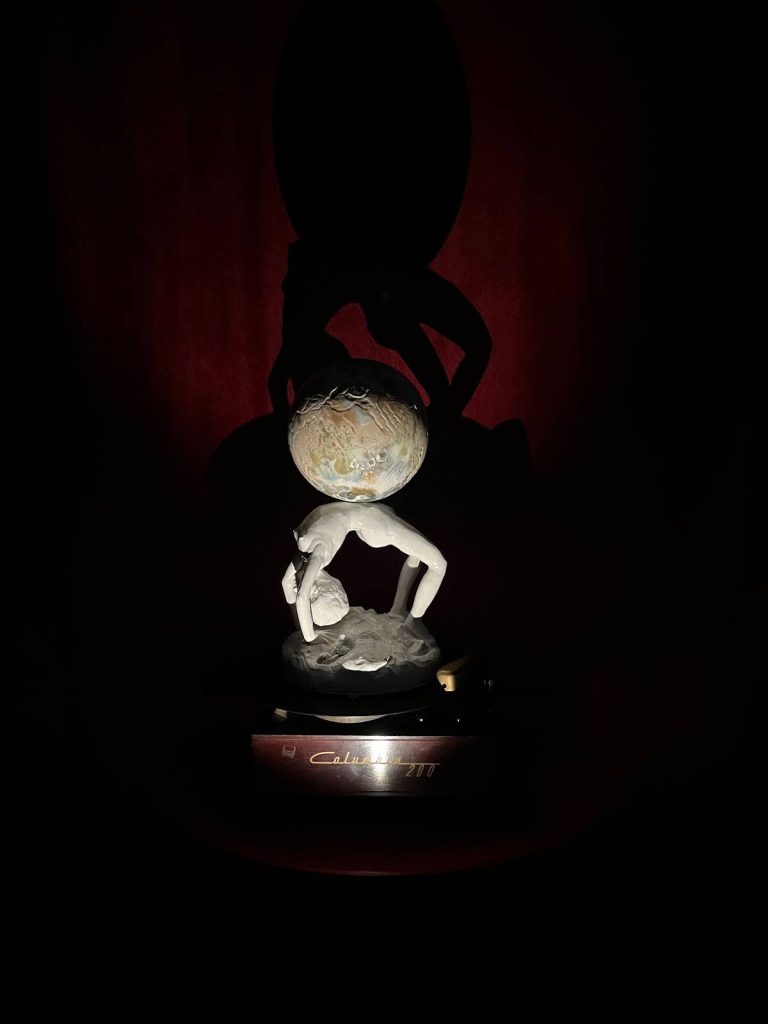
The fourth floor carried a more melancholic tone compared to that of the fifth. Upon entrance, there were acetate-based framed works projected onto different walls. Two porcelain figures balancing large unnamed moons on their stomachs were positioned in the center of the room, one a woman and one a man. Clearly based on the history of theater, and looking suspiciously Vaudeville-esque, they represented a clear desolation which was echoed on this floor with minimal, at times completely dark, lighting. All the figures were in battle with resistance, seeming to invoke melancholic strength as they overcame a given number of obstacles.
On one side of the room, there was a poem transcribed on a wall with an American Sign Language (ASL) rendition of the poem on video. The poem was fraught with emotion and hinged upon the possibility of vulnerability and strength’s coexistence. It also served to remind viewers of the poetic perspective in all of Boyle’s work, even though it is not always explicit. She uses symbolism and expressiveness in all of her work, creating a rhythm outside of language itself. Thus, her work remains poetical despite lacking traditional stanza written form.
The fifth floor invited viewers in with music that you could personally pick out from a preselected arrangement of songs from Boyle. All the songs were jubilant compared to the previous floor’s instrumental tone—pickings included Nina Simone and Bill Withers. She creates a portrayal of the female body engaged and active in political, emotional and cultural spheres. The epicenter of her sculpture work seemed to be the idea of female individualism-—evident in sculptures “Scarborough” and “Oasis” that showed widely different portrayals of femininity, one based on intersexuality and the other on LGBTQIA+ stereotypes. I also enjoyed that her work seemed to exist within a space between mysticism and corporeal exploration, while also being interested in the political discourse of the 21st century.
I have never experienced an exhibit that so rawly defined political and emotional topics, sometimes in entirely different ways. From having three pieces devoted entirely to white privilege and the different ways it manifests, to sculpting an old woman disoriented with her own image when looking in a mirror, Boyle is able to tackle art without picking a perspective or losing her message(s) through genre.
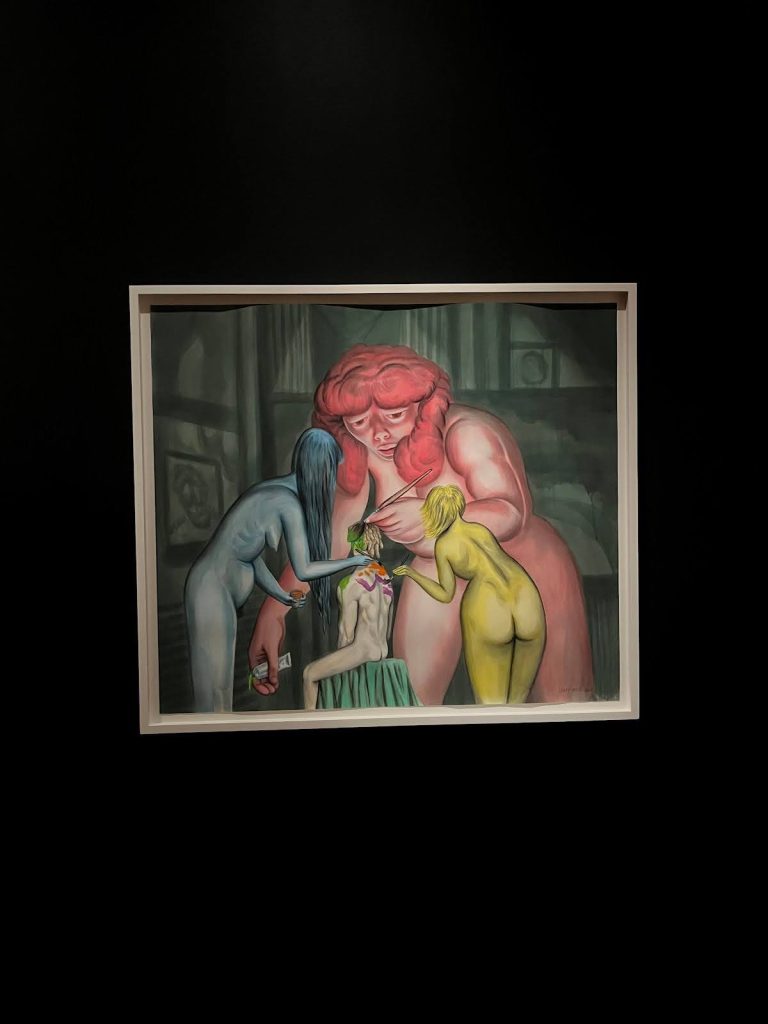
Her work pulled at so many parts of me, and felt both personal and available to me. I have never felt so activated within a gallery, or tender. Although the exhibit is now closed, I encourage all to explore Shary Boyle’s work online or in another gallery or visit Manhattan’s Museum of Art and Design for their future exhibits.