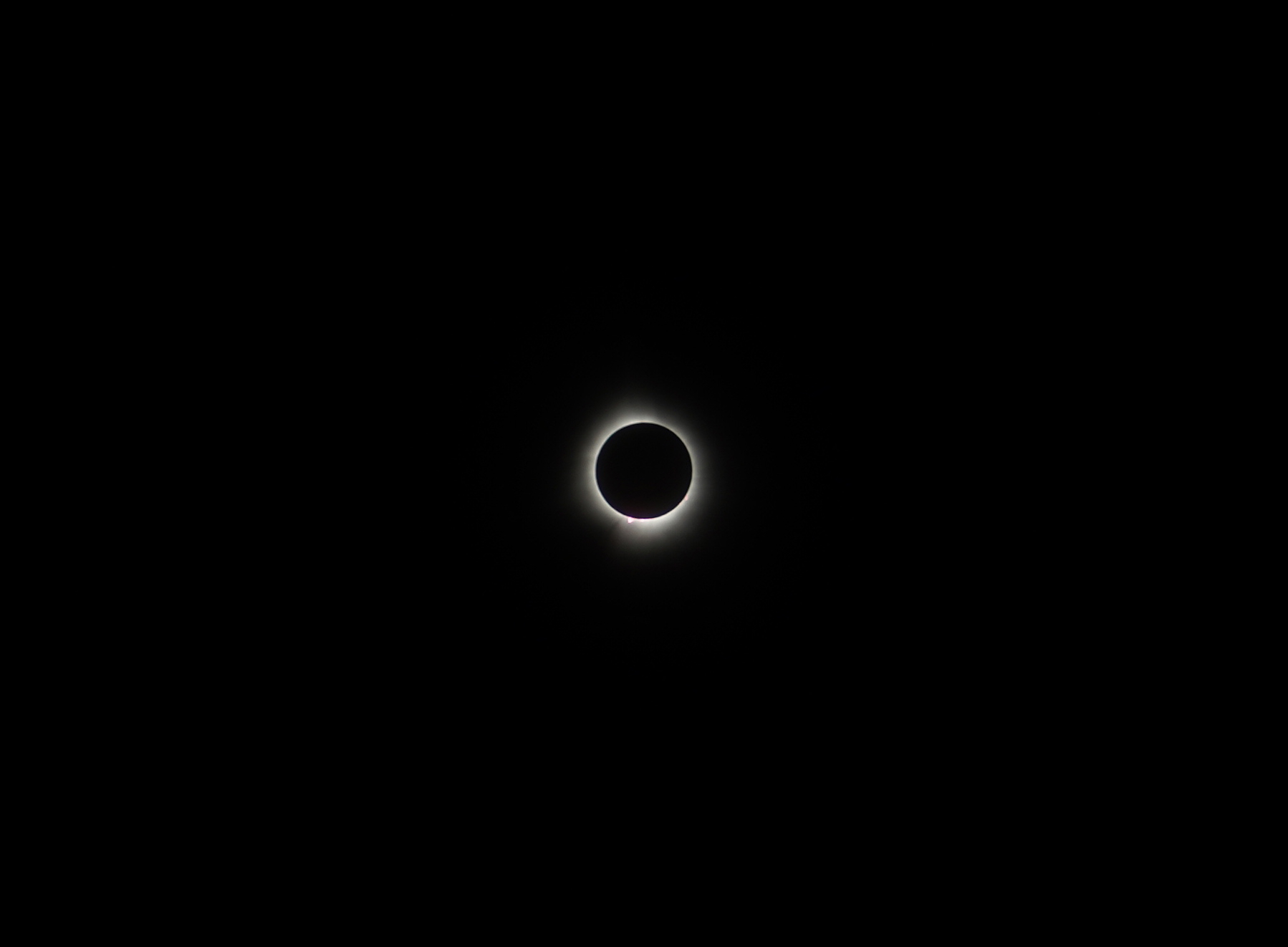
As everyone is well aware, there was a total solar eclipse across much of the United States on Monday, April 8. It was the last total solar eclipse the continental U.S. will see for another two decades. What’s more, its path led near Poughkeepsie—campus would get a 94 percent partial eclipse—and the path of totality was just a few hours’ drive away. For lots of us, the eclipse was hyped up as a life-changing or once-in-a-lifetime experience (never mind that we had one seven years ago) and in the days leading up to it, I, like many people, was excited.
I wanted to see the total eclipse, largely because of my crippling FOMO. I had heard amazing things about the experience—how day turns to night, how you can see the sun’s outer atmosphere, how otherworldly and out-of-body the whole thing can be. I had been told that there was a night-and-day difference (no pun intended) between a total and partial eclipse—that even the 94 percent coverage we’d get would not be anything near the “real thing.” I would have to travel up to Burlington or Buffalo for that, though, and the logistics of that were complicated.
But some friends and I managed to scratch together a plan. We would make the four-hour trip up to Burlington, stop in a park or something like that, and marvel at the sky. Never mind that Mondays were my busiest days, and never mind that I had a giant paper due that night—I was not going to miss out. I emailed professors that I would be missing class, I worked diligently to clear off my plate for Monday, and I let myself daydream about what a transformative experience I was about to have.
But the night before, as I frantically tried to finish that paper, true disaster struck. The plans fell through. There was a miscommunication about our ride, and we did not actually have a vehicle to get us to Vermont.
I was crushed—I felt like I had missed out on the chance of a lifetime. I would have to be content with a measly 94 percent on campus. And I knew it wouldn’t be nearly the same as what Burlington would see. The sun would just get a little dimmer. And I would have to deal with that.
My fear of missing out thus realized, I did not feel like I was in a great position to enjoy what I still could of the eclipse. On Monday morning, I trudged across campus to go to the classes I had been set to miss, sheepishly explained to professors why I was able to make it to class after all, and brushed away any attempts by friends to get my mind off of it. Eventually, 3 p.m. rolled around. Down in the dumps, I came out to the quad.
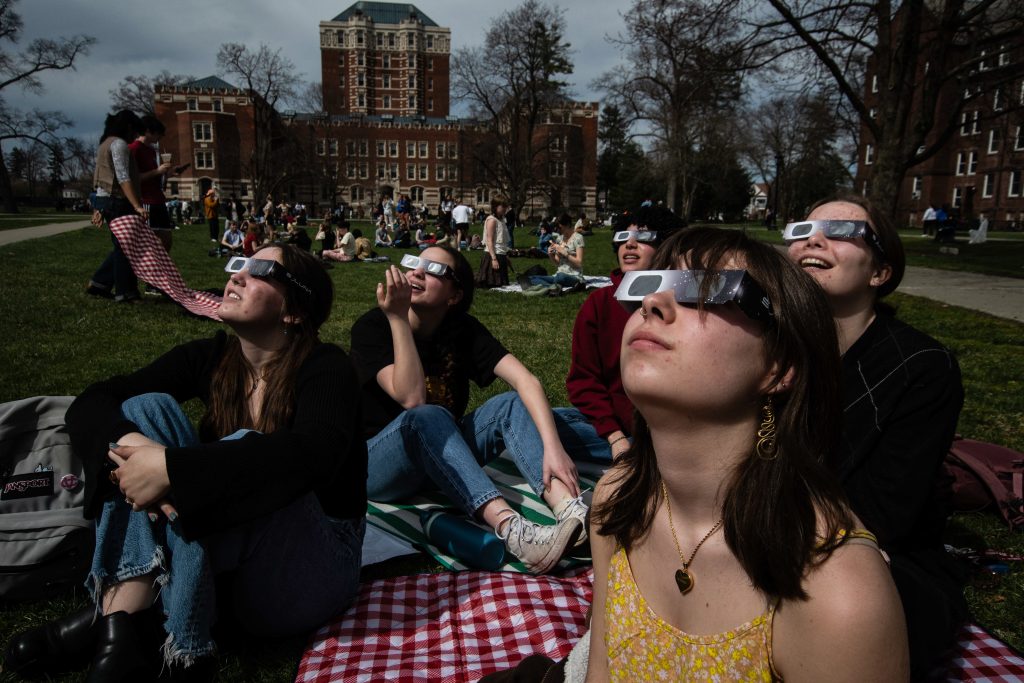
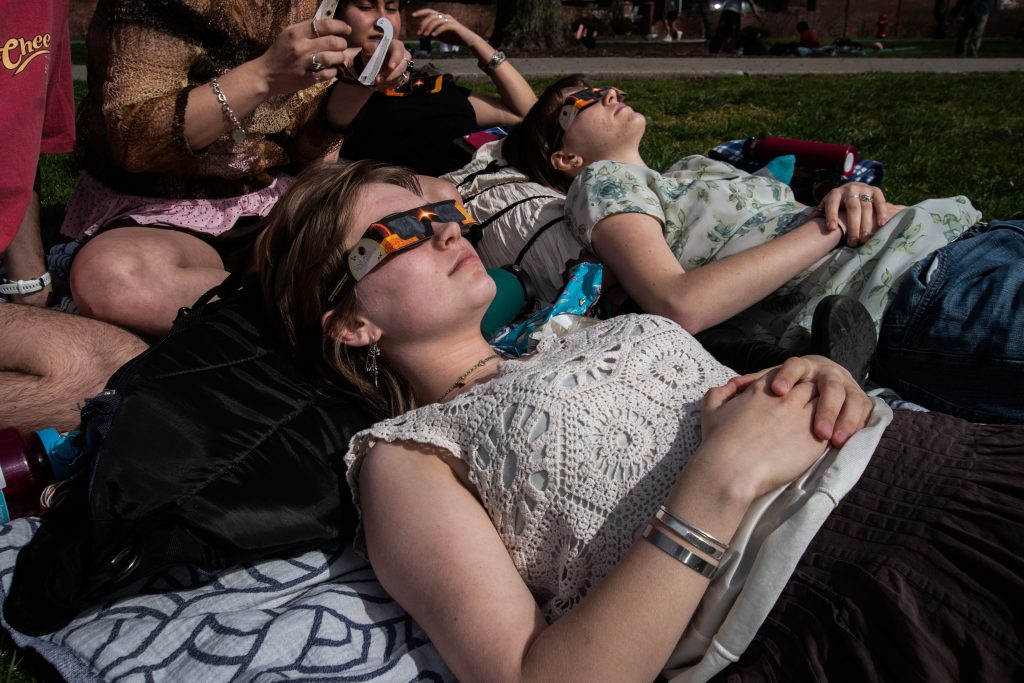
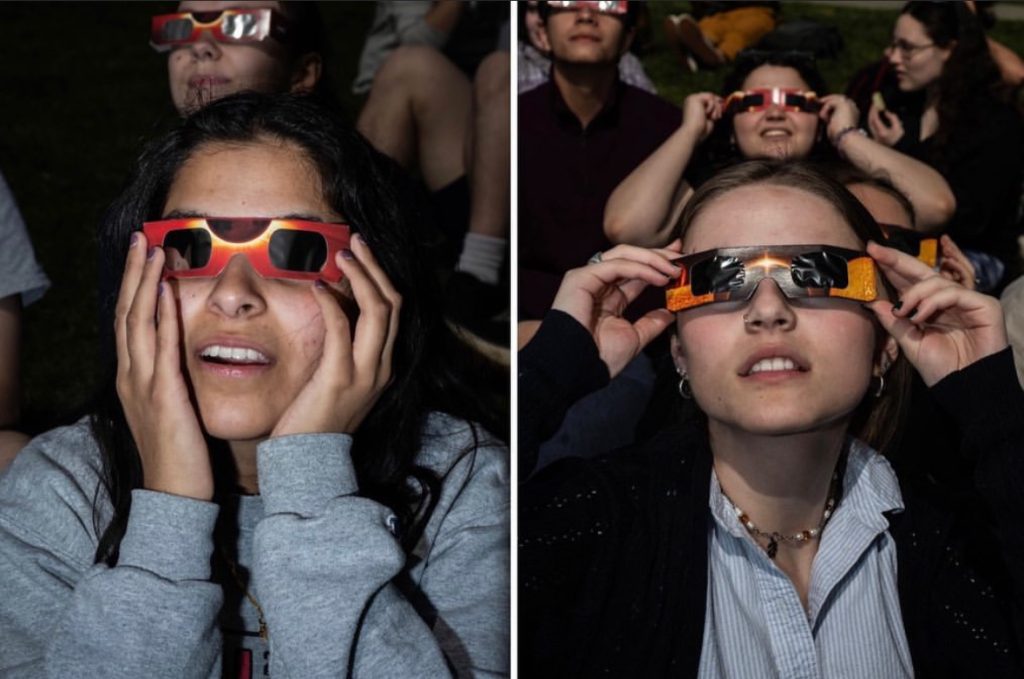
I had never seen that many Vassar students outside in one place before: everyone lounging with friends, playing catch, setting up telescopes, lying in hammocks, laughing. It felt like every single person I had ever seen or met or interacted with before at Vassar, every campus celebrity and friend and enemy, were all sitting there together, wearing funny dark glasses, looking up at the sun like it was a TV show.
Looking through my glasses at the forming eclipse, it just felt uncanny—obviously, this is what one expects from an eclipse, and yet all I could think was “how strange.” You could notice the gradual change as the sun and moon inched toward one another, the moon covering the sun to make the sun look like a moon. Still, though, without glasses, nothing looked different. For a while, aside from everyone’s funny ISO-certified shades, it was like we had picked a completely normal day to all come outside.
But then it got darker.
Not much darker, mind you, but enough to make a difference. The temperature dropped noticeably, and I put on the jacket I had lain out on the ground. I had read online that even a 99 percent eclipse was completely different from totality, and I suppose I had taken that to mean there wasn’t much to be excited for. But there was something profoundly strange about it—like someone had turned down the exposure on a photo, or like I was wearing invisible sunglasses. The sun was shining, but everything was dim. All I could do was to say to everyone around me: “Isn’t this weird?”
Things seemed to quiet down as the minutes rolled by. And at 3:25, one minute before maximum coverage, tentative applause broke out. The sun was just a sliver then. Everyone seemed to be holding their breath, the seconds slowly ticking away.
And then: 3:26 p.m., April 8, 2024. Maximum coverage. The magic moment.
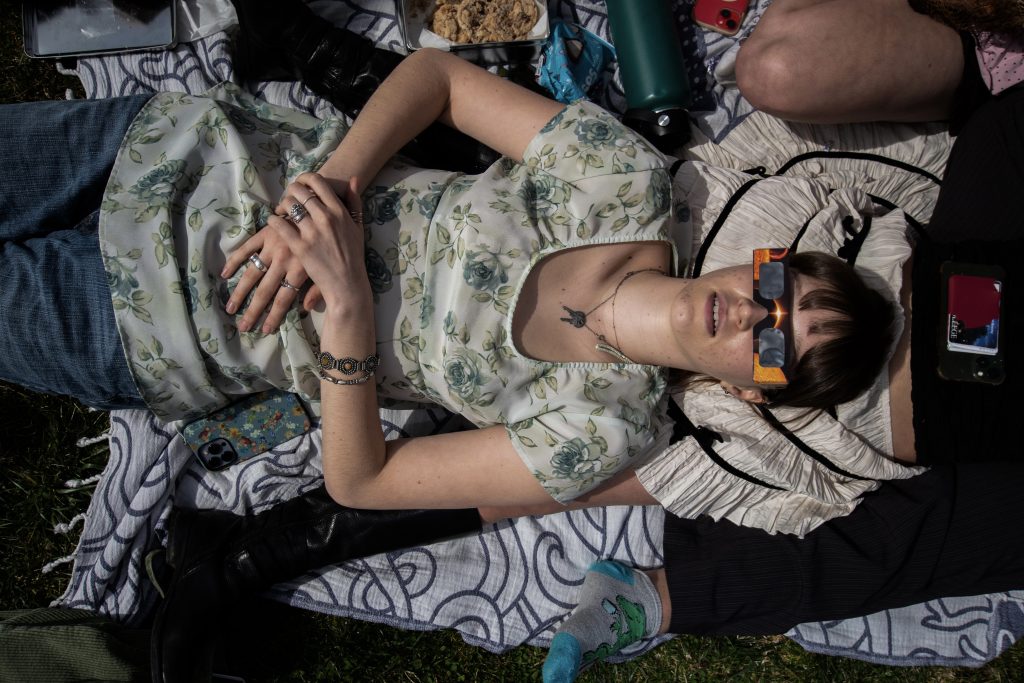
Now everyone knew the cue. Everyone—all the hundreds of people gathered together—started clapping, not for anyone in particular. Scattered whoops and hollers broke out, too, everyone alternating between looking at the thin strip of sun in the sky and around at each other, in the dusk-like light of midday. What was happening felt eerie, otherworldly, unbelievable. And yet, here we all were. We clapped for the sun like it was performing for us—which, in a sense, it was.
That’s what stuck out to me about this year’s eclipse, more than anything—how crazy, wondrous events like this pull us together in shared admiration. Beyond simply how incredible it is that we’re able to accurately predict eclipses decades and centuries in advance, the mere human desire to see the eclipse is so beautiful; how moved and affected we are by these moments of wonder and awe, and how, even on campus where we didn’t even get a full eclipse, everyone still got their silly glasses and their blankets and their friends all together to see something as simple as the moon passing in front of the sun.
(Fun fact—apparently it’s only by chance that the moon and the sun appear about the same size. The sun is about 400 times bigger than the moon, and it also happens to be about 400 times further away. The kind of eclipses we have are unique, then. Most planets don’t ever get to have them.)
If I had gone to Burlington, I am sure it would have been wonderful. I heard as much from a few friends who did go to see the total eclipse—one friend said it almost brought her to tears, even. But nowhere other than Vassar would I have been able to experience what I did—to see this familiar campus partially blocked out by the moon, to see hundreds of familiar faces looking together at the sky in this shared moment of wonder. 94 percent ended up being more than enough for me.
Then again, the next total eclipse is in Spain two summers from now, if anyone feels like coming with…