
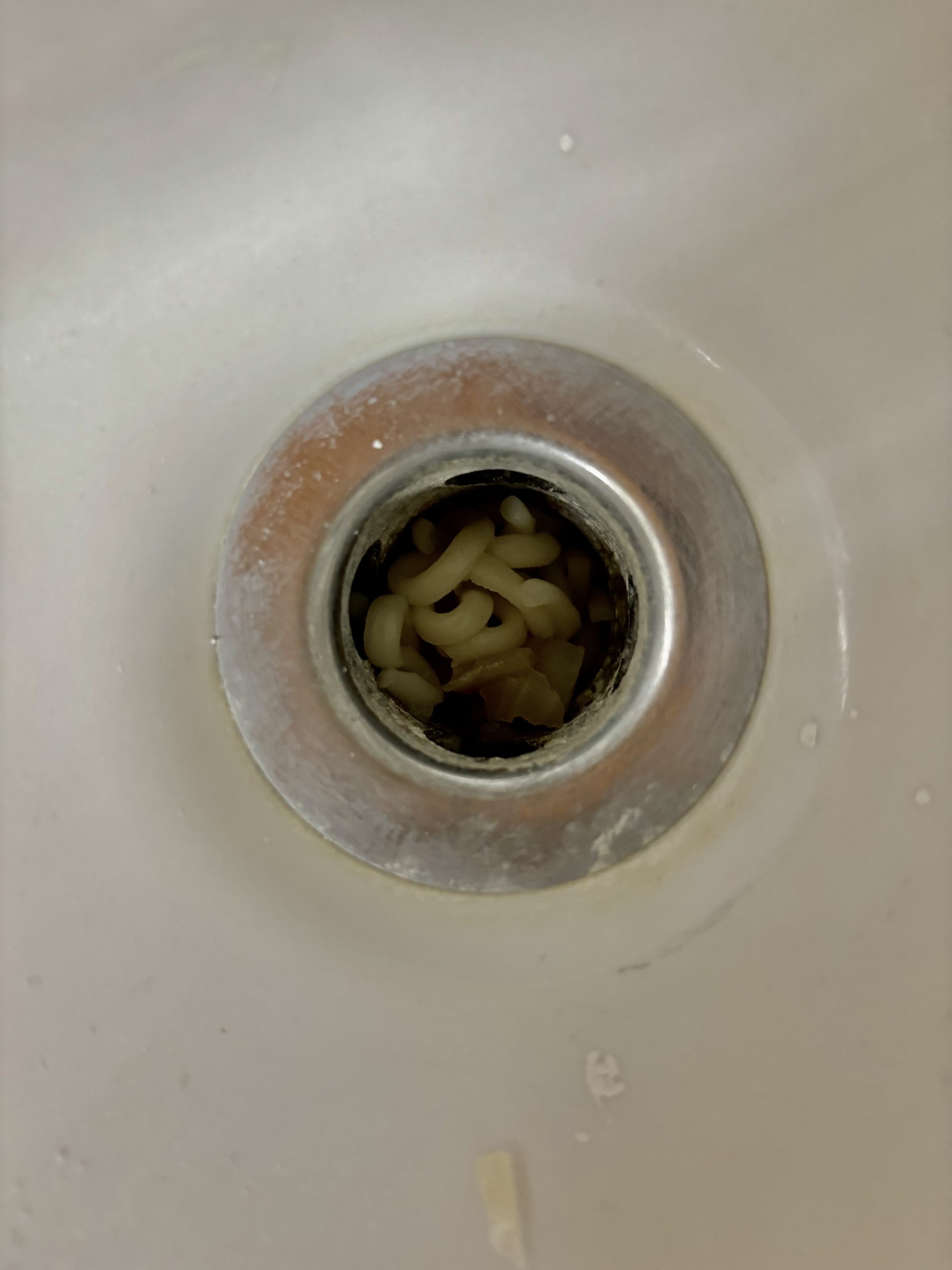
There is no worse feeling than coming back to campus and seeing that your favorite dorm bathroom sink is hopelessly clogged. Apparently someone didn’t know soil is not an acceptable thing to pour down the drain, leaving a pool of dirty water with floating chunks of earth in it. To avoid such ineptitude, I’ve compiled a collection of things that definitely shouldn’t be dumped down the drain, lest you be the next fool that clogs my favorite sink.
First and thus most importantly, do not pour any form of noodles of any kind down the sink. You’re just gonna pour perfectly good noodles down the drain? I don’t care if they are ramen, spaghetti, pool or otherwise. They’re gonna sit at the bottom of the drain like a bunch of slinky trolls beneath a bridge—indefinitely. You might think a rubbery food would surely break down in such wet conditions, but no. All forms of noodles excel in watery conditions.
While you’re at it, please, please, please, please do not pour any shredded copies of “Diary of Wimpy Kid: Rodrick Rules” down the sink. Come on! This is the best book in the series! It’s the one where Rodrick and Greg briefly reconcile their differences after pages and pages of conflict regarding Rodrick’s fledgling band! Why must it go down the drain? All that paper pulp will no doubt clog the sink anyway. Greg helping Rodrick with his science fair project, “Do Plants Sneeze?”, is not something you can so easily erase.
Wait, now you’re trying to pour a jar of perfectly good nails down the sink? You could build so many birdhouses with those nails! Think of the starlings, cardinals and titmice! The sink will not consume the 50 or so nails that you intend to feed it, not one bit. The sink won’t even know what to do with them, building a dam, a house for beavers instead of a house for birds.
What are you up to now? Oh! Do not pour your or anyone else’s baby teeth down the sink. Why would you do such a thing? They helped you consume food throughout your childhood! The least you can do is hold onto them. A better alternative would be to put them in the soil so that they can nourish the earth once again, or maybe you could sell them for money. I know how it starts: you have all these baby teeth lying around that your mother gave back to you when you were 16 after she admitted to you that the tooth fairy was nonexistent. You have no use for these. Maybe the sink will know what to do with them. This is a terrible conclusion to come to. No sink has ever desired teeth.
As enticing as it may seem, do not pour a recently deceased goldfish down the sink. Like most fish, the gold variety will not immediately decompose in water, leaving the unforgettable scent of death in the meantime as it clogs the system. Goldfish are technically solids, so in cases like this, I remember the initialism, ABL: Always Be Liquifying. It may hurt your heart, but a pureed fish will have a much better time escaping the drain than a solid one. Otherwise, take a more rugged approach and just flush the poor guy.
If you are currently enrolled in a glass-making class, please do not pour your excess sand down the sink. Sand is for children’s play implements and deserts, not sink drains. What you can do instead is box up your remaining sand, put it in a drawer and forget about it for a few months. Then you’ll rediscover it, saying, “Who left all this sand here?”
This is by no means an exhaustive list of what not to pour down the sink. A good rule of thumb is to imagine that I am standing right next to you, and if what you’re pouring would make me say “Now why would you go and do a thing like that? Foolish, foolish, foolish,” then maybe don’t do it.