
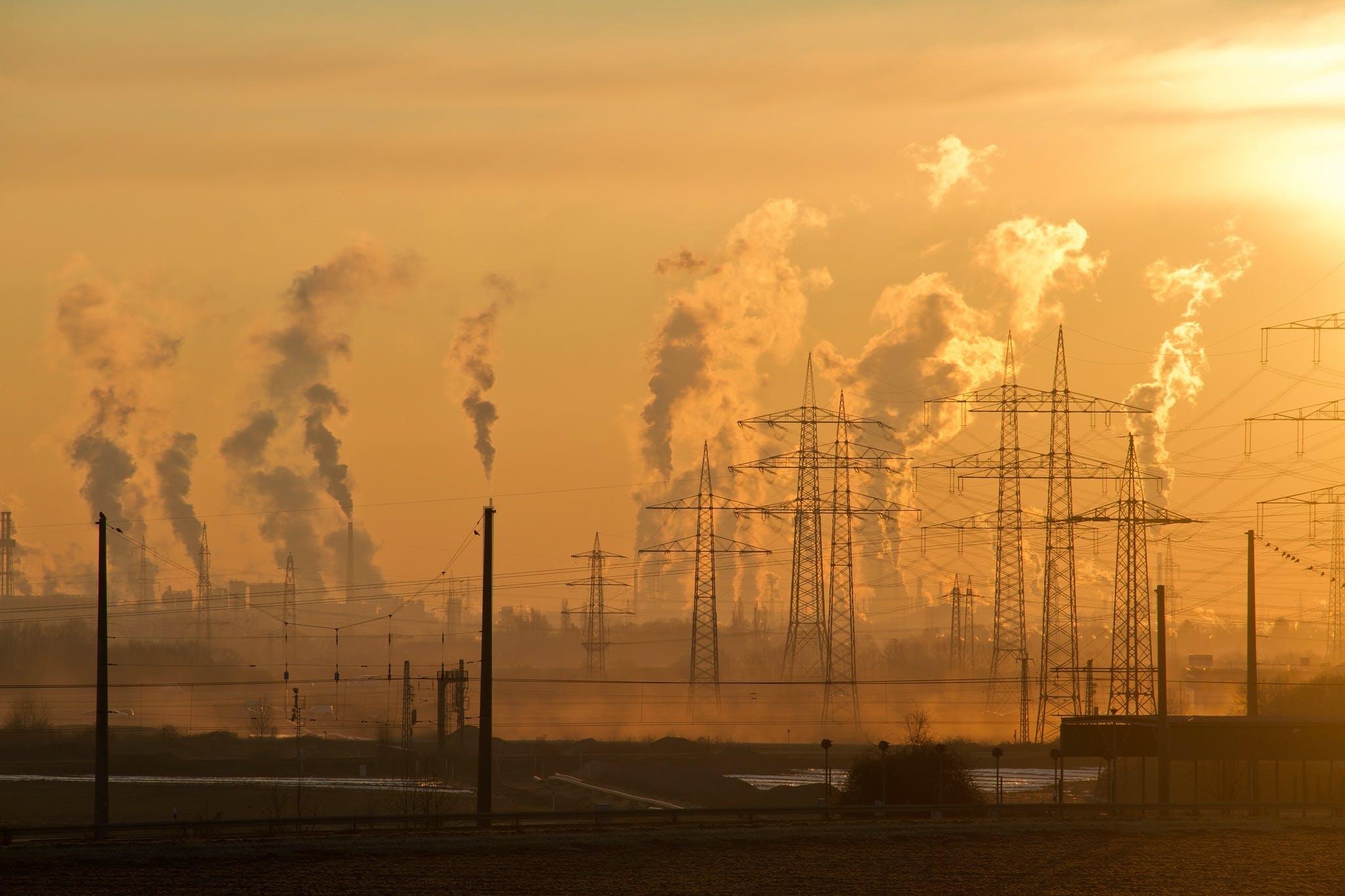
Did you know that the Earth is warming up? If the answer is no, what are you doing at Vassar? Do you think enough is being done to combat climate change? If the answer is yes, see above and also read the room, man! I think I speak for everyone on campus when I say climate change is an issue, and furthermore, it is an issue that is not being addressed properly. Scientists are also in agreement regarding climate change and have explained countless times what the issue is and what we can do to address it. They say if at first you do not succeed, try, try again. What they should say is if at first you do not succeed and the world is a ticking time bomb—pivot like hell. Since the current approach is not working, I am here to present an alternative.
When most people think of climate change, they think of 60 degree days in February, Greta Thunberg’s emotional “How dare you!” and the ocean reclaiming Florida. What they do not think of is philosophy. Last semester I took both ENST 124: “Global Change and Sustainability” and PHIL 234: “Ethics,” and there is a surprising amount of overlap . Since science has not really moved the needle regarding climate action, I am going to present the possible ways philosophy can.
Utilitarianism is a philosophy focused on maximizing the net good in the world. This good (according to utilitarians) is human happiness. Utilitarianism is a form of consequentialism, which is the branch of philosophy that judges the morality of an action by the consequences it produces. The idea that the best actions are the ones that result in the best consequences is a SparkNotes version of consequentialism. Utilitarianism is very much a large scale philosophy. The most famous example is the trolley problem, where you can either kill one or five people. It does not matter who those people are; from a utilitarian standpoint it is a no-brainer that you should only kill one person. To connect utilitarianism to climate action, let us look at the example of switching from coal to renewable energy. It is important to note that in this scenario the coal workers would be able to get new jobs working for the renewable energy plants. This switch would constitute a loss of a large source of income for many people investing in coal. But it would also create new jobs and decrease our emissions, which would save who knows how many lives. Again, the choice from the utilitarian point of view is quite obvious.
Now, let us take a look more broadly at the decision to take drastic measures to combat climate change. I do not need to say how many lives could be saved or changed for the better because scientist after scientist has. Instead I am going to dwell on the moral implications of this decision. Many (and probably all of us here) would say it is morally dubious to not take action to combat climate change; however, such a conclusion becomes even more obvious when adding the consequentialist principle of negative responsibility to our decision process. Negative responsibility is the idea that in addition to being responsible for all the consequences of our actions, we are also responsible for the consequences that may occur due to our lack of action. Let us say we do not do anything that raises our current emissions, but also choose not to take drastic action to combat climate change. When Florida is submerged, we begin to ponder how we got here. We did not submerge Florida; and yet, because we did nothing to combat climate change, Florida has been submerged. According to the doctrine of negative responsibility, we are responsible for this unfortunate chain of events.
Another lens from which we can analyze our actions is through our motivations. One of the most prolific supporters of this way of thinking is German philosopher Immanuel Kant. Kant bases this motivation off of duty. Put in more simple terms, the only way for our actions to carry moral worth is doing them because we know it is the right thing to do. Actions that produce good consequences from corrupt motivations carry no moral worth. For example, helping someone study because you want to cheat off of them has no moral value. Taking it back to the climate crisis, committing to large-scale change only to score political points has no moral value. In other words the only acceptable motivation for trying to stop climate change is a duty to stop climate change.
The reason I introduce this way of thinking is to challenge the ways we attempt to frame the conversations regarding climate change. Many arguments in favor of drastic climate action tend to point out the economic benefits of such actions. If we all followed a Kantian point of view, we would only need to point out that it is our moral duty to challenge climate change. However, I acknowledge that this particular argument is rather weak because most politicians are not going to approve drastic climate change measures based on the ideas of a long dead philosopher. I am merely pointing out how the discourse surrounding climate change runs contradictory to several different ethical philosophies.
The science has not changed. The concern climate scientists have for our future has not changed. The fact that we are pretty screwed if we do not take action has not changed. And yet, although we have made some progress via legislation such as the “Inflation Reduction Act,” we still have not done enough. I believe that if we wish to escape this stalemate and the facts that are not going to change, then our outlook must change. Right now climate action is seen not even as a scientific debate, but as a political debate. This debate has made little progress. I think this reason (along with many others that I have listed) suggests that we should pivot the debate surrounding climate action from a policy debate to a moral debate. If people begin to associate climate action with increasing the net good and inaction with being unethical I believe we can move the climate discourse forward in a way we have as of yet been unable to.
Well thought through. Well presented. Well written. Interesting insights.
Excellent points on a critical topic. Well written and argued!
I agree with you Zach, our outlook on climate change must change. A moral debate that deepens our understanding of the consequences that future generations will endure from a changing climate is beyond ethical, it is a duty we own! Keep writing on this issue. The more people you impress, the sooner we can generate positive results.