
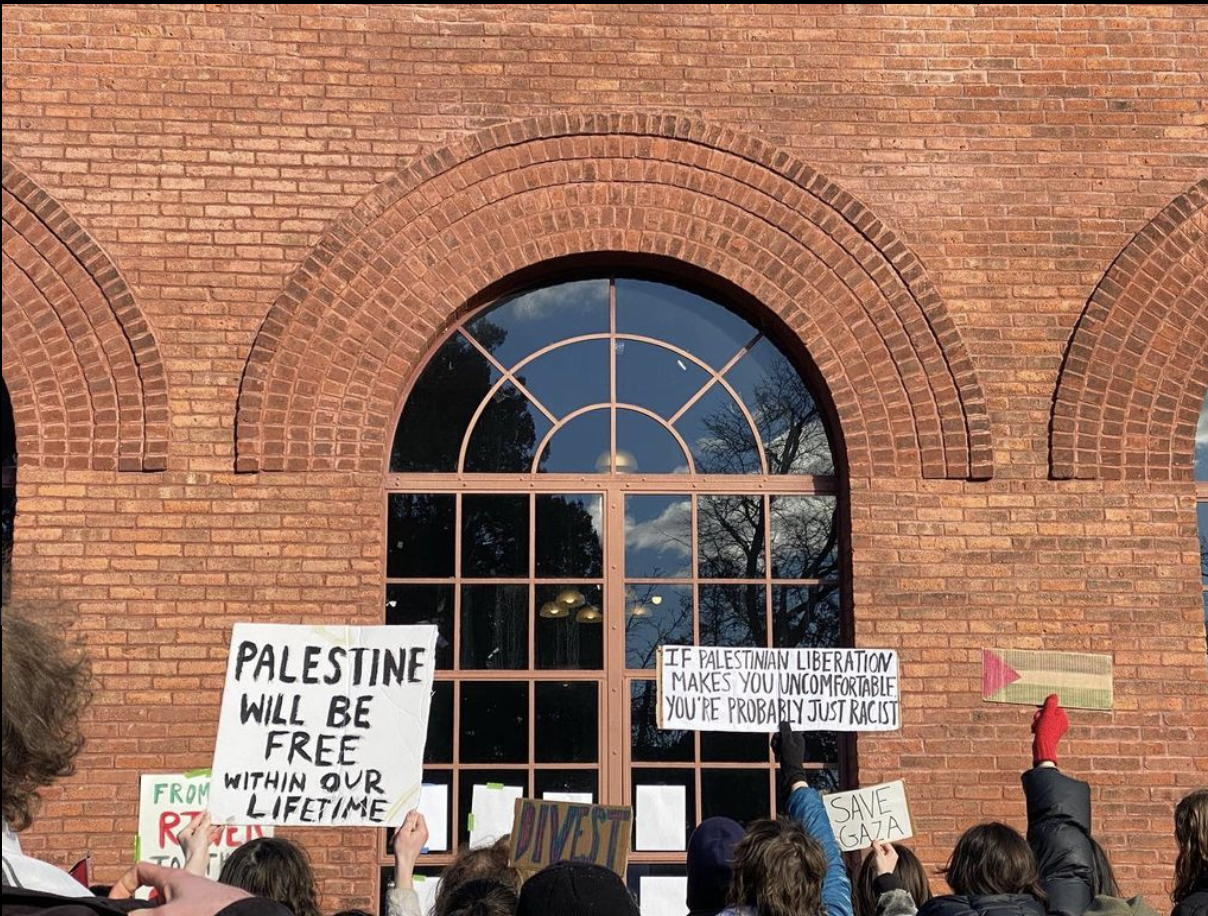
On Feb. 16, 2024, Vassar Students for Justice in Palestine (VSJP) made an Instagram post outlining their commitment to the Boycott, Divestment and Sanction (BDS) movement, writing, “BDS is a tangible approach we can take as the Vassar student body to put pressure on Israel as the occupation of Palestine intensifies.” The post came hours before a protest held outside of a Board of Trustees meeting that demanded the College divest its endowment. VSJP has clashed with the administration over this demand since 2016, as the College’s General Counsel has explained that the College has no plan to divest.
The BDS national committee’s website reads, “Inspired by the South African anti-apartheid movement, the BDS call urges action to pressure Israel to comply with international law.” VSJP member Kelly, who requested to only use their first name, notes that calls for divestment were a tool used in student protests at Vassar against South African apartheid, though it took the college around a decade to actually divest.
Kelly reports that most, if not all, chapters of SJP support the BDS movement, saying, “[It] was created in 2005 by Palestinian civil society and groups of Palestinians who basically agreed that one of the most effective forms of nonviolent protest is an economic boycott and sanction of Israel.”
VSJP’s calls for divestment from Israel at Vassar include two parts: one, for the College to divest its endowment, and two, for the Vassar Student Association (VSA) to boycott companies on the BDS list with its allocated funds.
Complicating this goal is Executive Order 157. Issued by New York Governor Andrew Cuomo on June 15, 2016, the order requires state agencies and authorities to divest public funds from any organization that supports “boycott, divestment, or sanctions activity targeting Israel.”
Cuomo’s executive order makes divestment from Israel much more of a challenge than past divestment campaigns. Vassar’s General Counsel, Shay Humphrey ’91, explained in a written correspondence to The Miscellany News, “Under the order, the Commissioner of the Office of General Services of New York is required to put together a list of organizations that participate in BDS actions against Israel. Any organization on that list is banned from receiving funding from any New York State agency.”
In addition to companies on the list being denied state funding, they are also prohibited from business dealings with state agencies. The order defines state agencies as being any departments over which the Governor has executive authority.
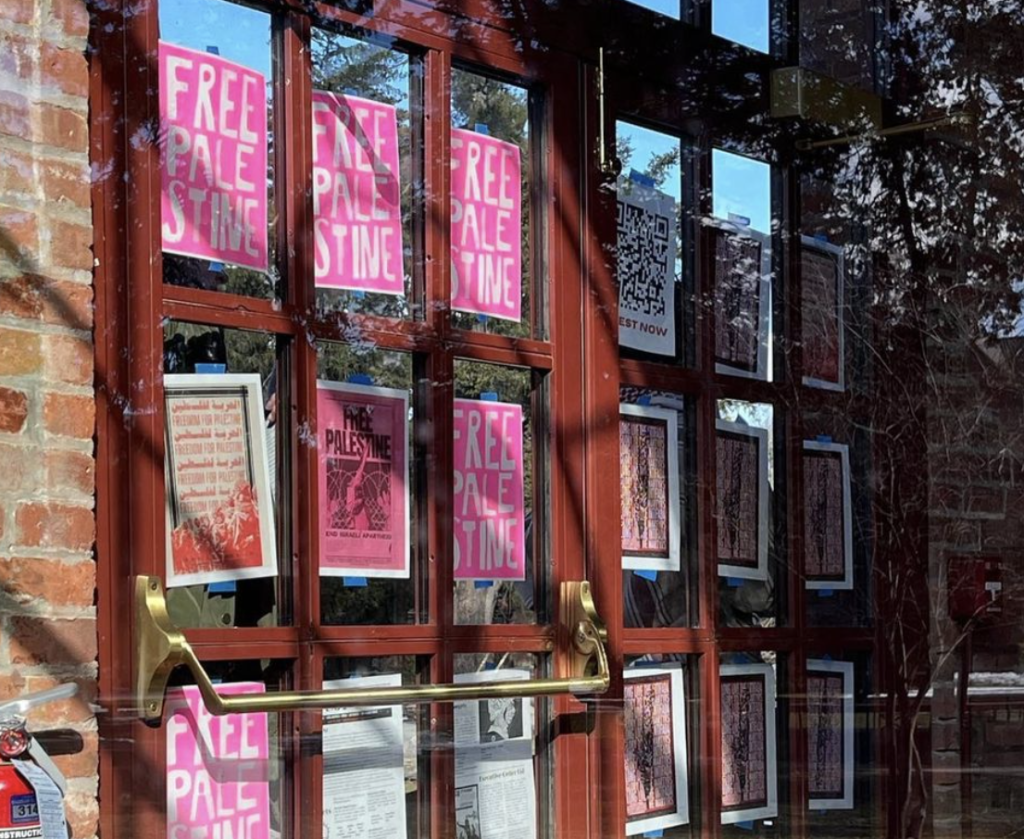
VSJP’s post on BDS included a note on the concern raised over the order and alleges that President Bradley deemed a campus-wide boycott illegal.
But according to lawyers outside of Vassar that VSJP has consulted, “illegal” would be the wrong word to use when talking about how the order deals with divestment, noting that enacting BDS is not actually prohibited, Kelly says.
Humphrey writes, “So while there is no NYS [New York State] law prohibiting an organization from enacting BDS sanctions against Israel, an organization that chooses to do so will likely be placed on the NY Office of General Services List and therefore would not be eligible for any funding from New York State. If Vassar were placed on this list, it would mean the termination of all New York State funding to Vassar, which could include monies for scholarships, state financial aid, and research or grant funding.”
Kelly believes that the likelihood of being placed on that list is very low. They acknowledge that being placed on the list means risking state funding; “But [of] all the companies that have been on the blacklist in the past eight years that the executive order has been enacted, none of those companies have been universities,” they said.
In 2020, Columbia College passed a referendum calling for the College’s divestment from Israel, although the college said this would not affect their investment plan. This action did not result in placement on the state’s list of BDS participants, likely because it was not actually BDS legislation. On March 3, 2024, Columbia College Student Council approved another referendum to be sent out, as well as BDS legislation for their organization’s funds. We have yet to see if this will result in placement of the state’s list, as the document is updated every 180 days.
Humphrey also notes that enacting BDS measures could result in the college facing charges under the New York State Human Rights Law. She writes, “Last year, after the faculty council at CUNY’s School of Law passed a resolution against Israel, the NYS Division of Human Rights launched an investigation against CUNY’s School of Law to determine whether this was a ‘discriminatory boycott’ against Jewish and/or Israeli students and faculty.” This marks another difference of this campaign from the South African divestment campaign because in that situation, there were no charges that could make enacting divestment a violation of state or federal anti-discrimination laws.
Divestment at the college level is a complex process. Kelly says, “There’s so little transparency on where the school’s money is, and where it goes.” VSJP has been told that information about Vassar’s investments is inaccessible because it is outsourced to Capital Hall Partners. Humphrey explains that the Investment Committee of the Board of Trustees determines investment policy at Vassar, and that the Board has a specific Investor Responsibility Committee to review issues of “overriding social concern.”
In addition to demanding that the college divest, VSJP has also focused on possible divestment of the VSA’s allocated budget for student organizations. Kelly says that VSJP did not know about the executive order until this year because last year, their conversations with the VSA were cut short. “We were told the VSA will not help us pass any type of legislation to boycott Israeli goods because it will put other goals of the VSA at risk,” they said. This year, VSJP has been in much more regular contact with them, attending meetings and working in committee.
VSA Equity Executive Traci Francis ’25 says that Humphrey has advised them that divestment within the organization is not possible under the current order. In the Spring of 2016, when VSJP first pushed to get the VSA to pass BDS legislation, the VSA was told by then-President Catharine Bond Hill that the administration would take full control of the VSA’s funding. A Miscellany News article published at the time refers to the yet to be issued executive order as a bill that was making its way through the New York state legislature. Francis suggests that instead of BDS legislation, the VSA could write a statement that gives student organization leaders the option to not spend their money with companies on the boycott list, but this would not be enforced. She adds, “I would hope that we can send something out to org leaders in terms of a different…form of BDS that will follow the law if that’’s something that they’re still interested in. But I think right now that they’re pushing for something more radical, which I just don’t know if it’s going to be feasible for us to do, but I hope that we can support them in some other ways moving forward.”