

As spring unfolds—with more frisbees thrown and more students opting for outdoor “studying” (sun-basking)—another pastime students partake in is hiking. Hiking is an opportunity to immerse oneself in nature and get away from the worries or woes of life, taking advantage of Vassar’s location in the Hudson Valley. With the weather warming up, now is the perfect time to try or revisit hiking. So, whether you are a beginner hiker who perceives hiking more as a long walk, or a more advanced, adventurous hiker who enjoys the uphill struggle and view from the top, here are some trails to check out in our unfurling moments of spring.
While Vassar’s Preserve offers trails that are close-by and accessible, many seek off-campus hiking spots that highlight the nature of the famous Hudson Valley. In fact, Anna Bishop ’25 prefers not to hike at the Preserve. She expressed, “Hiking allows me to get away from Vassar. The Preserve is an extension of Vassar—it’s not the same. You still feel like you are surrounded by humans, but when you go further away from Vassar, it feels like you are surrounded by nature and actually distancing yourself.” While some hikes may be a farther drive, they may be worth it for this feeling of distancing yourself from campus or for the additional hiking rigor that some would not find at Vassar.
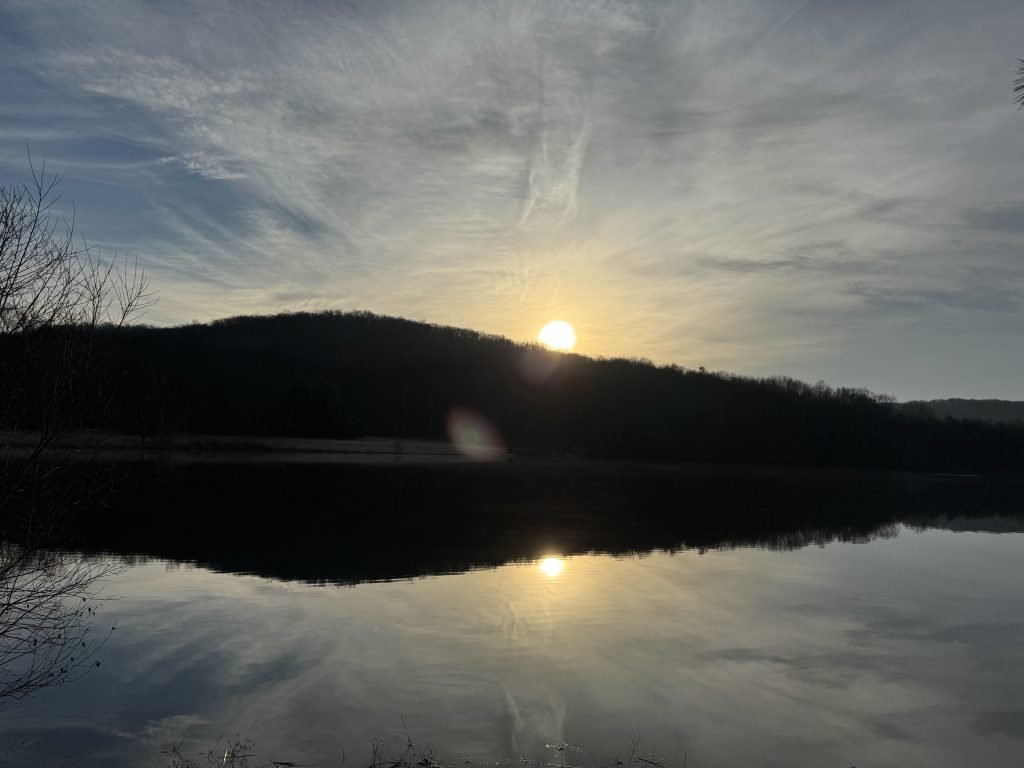
For a new hiker, Bishop recommends starting with trails that are well-marked rather than more isolated ones. Red Wing Lakes Loop is a two-mile loop in LaGrangeville, about a 20-minute drive away. With minimal steepness, the trail is ideal for beginners. Parking and entrance are free. A sunset or sunrise hike here is recommended in order to see the sky’s reflection in the lake and witness the sun peeking over and beyond the mountains. Another beginner-friendly trail is Dover Stone Church, a three-and-a-half-mile loop in Dover Plains, about a 30-minute drive from Vassar. There is an upper loop to a lookout spot and a lower loop to the stream and the Stone Church. While the lookout spot provides a decent view of the valley, if you can only do one loop, Bishop recommends the lower loop as the Stone Church is more exciting, allowing you to traverse the stream and cave below.
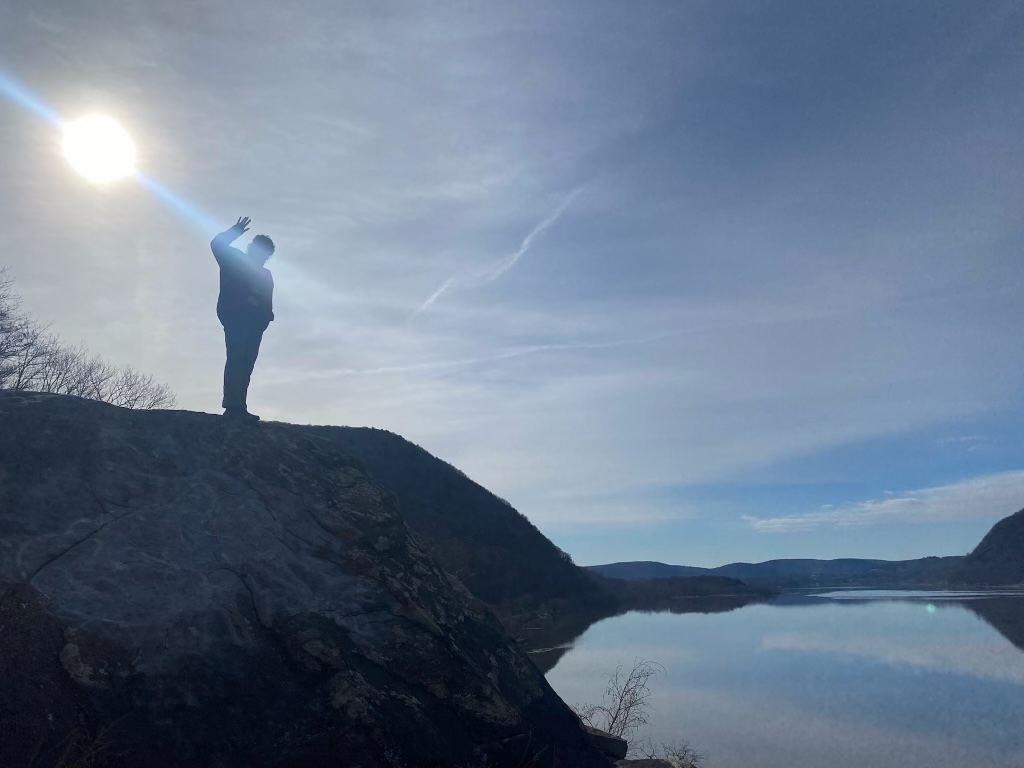
An intermediate trail is Lake Maratanza via Sam’s Point Loop in Cragsmoor, a 3.1-mile loop about an hour away from Vassar. While there is a parking and entrance fee, there is plenty to explore here, including the Ice Caves Trail, Verkeerder Kills Falls, Lake Maratanza, Lenape Steps and other scenic cliffs and vistas. Lake Maratanza is one of the five Shawangunk sky lakes, called this for its formerly crystalline water. Sam’s Point Overlook also provides a remarkable view of the Hudson Valley, so long as the many switchbacks and steep terrain are endured.
Breakneck Ridge, or Breakneck Bypass, on the Wilkinson Trail Loop, is a more difficult trail, a 3.2-mile loop near Cornwall-on-Hudson, roughly a 40-minute drive away. The terrain is notably steeper and significantly more challenging than other hikes mentioned. Hiking this trail in the winter is not recommended because of the icy or muddy conditions; however, springtime should be dry enough to gain traction. The rigorous hike pays off with the view at top. A similarly demanding hike is the Lemon Squeeze and Eagle Cliff trail in New Paltz, a seven-mile loop about 30 minutes away. Weather must be taken into consideration before attempting this one as well, as hiking this trail after a rainfall can make the trek dangerous or leave parts of the hike closed off. The “squeeze” part of the trail is the vertical climb of ladders through the boulders themselves. As expected though, the view makes the long and strenuous hike worthwhile.
Indeed, the more rigorous hikes tend to offer a grander reward, the outlook making the energy and sweat worth it. Hiking highlights the process to get to this reward, an opportunity to have a nice conversation with fellow hikers and friends or to just take a moment to pause in nature. Even if there is no view at the end, the enjoyment of getting there amid the beauty of nature seems to be an important thread in hikers’ motivation to undertake these challenging trails. As Bishop commented on why she enjoys hiking, “I like being outside—when I’m inside I feel stuffy. When you go on a hike everything feels clear.”
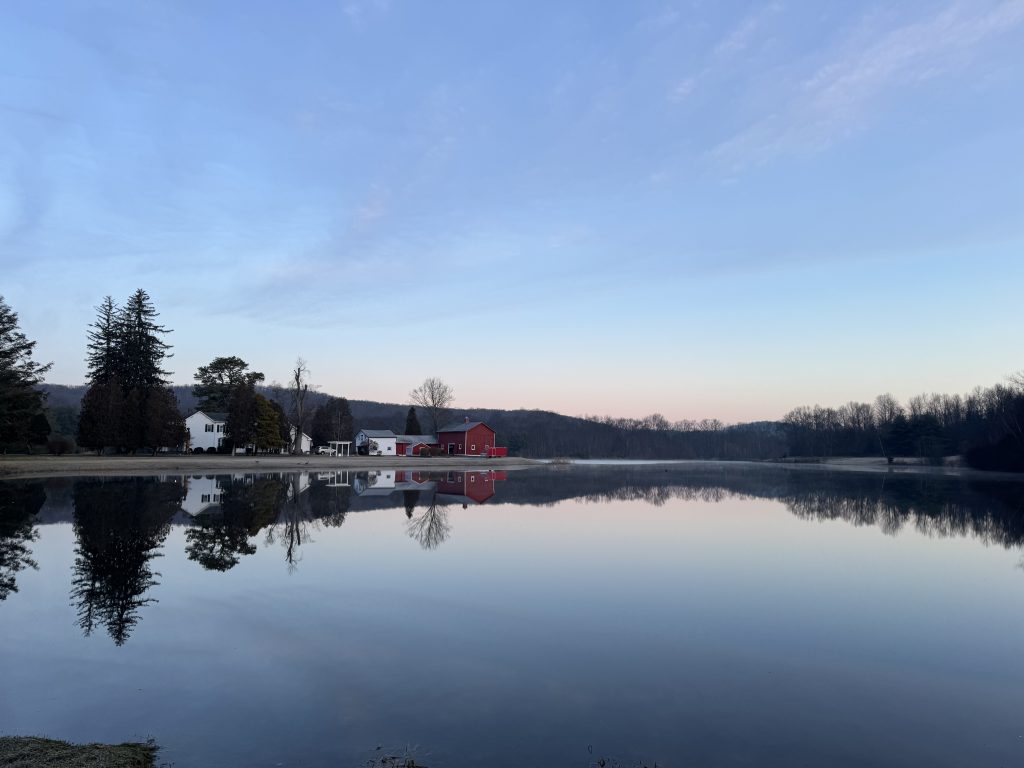
Being immersed in nature and this feeling of clarity is revealing of the benefits of hiking beyond its athleticism. Hiking forces us to direct our attention away from the self; our energy lies outward towards the view we are working to reach or the steep terrain we are trying to persevere through. Here, Iris Murdoch, an Irish-British novelist and philosopher, can grant some wisdom as she emphasized the importance of “objects of attention” to be unselfish, away from the self. Nature, it seems, provides a conduit for this unselfish attention. She states in “The Sovereignty of the Good,” “More naturally, as well as more properly, we take a self-forgetful pleasure in the sheer alien pointless independent existence of animals, birds, stones and trees. ‘Not how the world is, but that it is, is the mystical.’” Perhaps hiking is just one way to perceive this mystical world we so often neglect.