
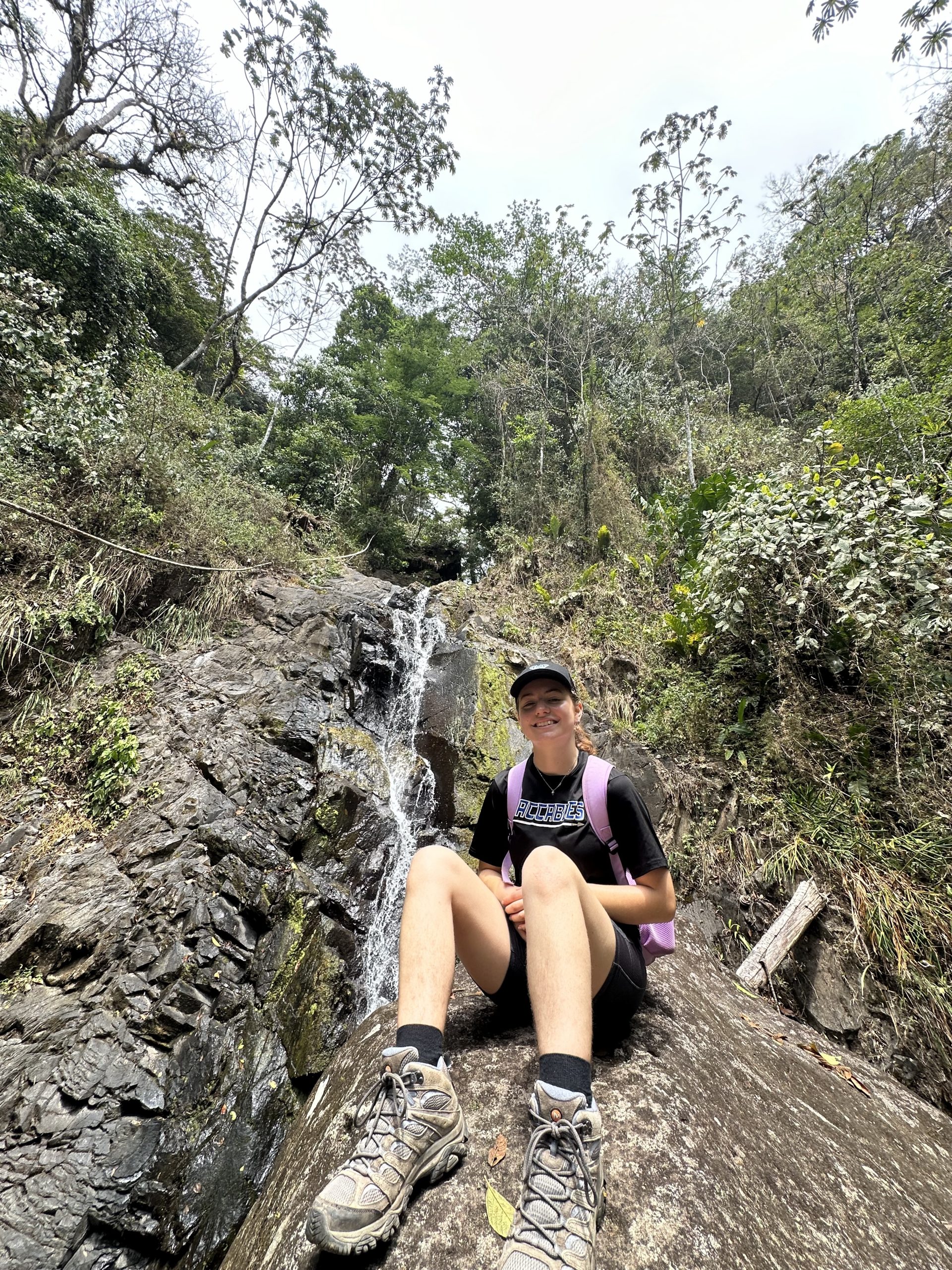
Studying abroad had been on my mind even before my college search. The colleges I chose to apply to were largely motivated by the availability of study-abroad opportunities. Once at Vassar, I finally chose a program and, earlier this year in January, I flew to Panama. The tropical ecology program with the School for International Training taught me so much in terms of both ecology and life lessons. Since returning to the United States, I have been grappling with what I will take away from my experience in the long term.
While exploring, we learned about the biodiversity of species and the diversity of cultures in Panama. We traveled, saw the sights, and took classes while learning from the environment around us. Panamanian professors taught our classes. My favorite was our amphibian unit, which we had in El Valle de Anton, a huge valley surrounded by mountains. We woke up most mornings to a gorgeous golden mist hanging over our heads. Our research was after dark, when frogs are most active. In groups, we searched for amphibians with headlamps, counting and identifying them.
The coral reef unit was the most impactful. We stayed with the Guna people, an indigenous group whose livelihood centers around the ocean. We took a four-hour bus ride, an hour-long car ride, then an hour-long boat ride to get to Isla Porvenir in Guna Yala. You could walk from one side of the island to the other in less than ten minutes. Here, we studied coral reefs, snorkeling for hours in the clear, warm ocean. We also had the opportunity to hear from a community leader, buy molas (handmade textile art) and talk to Guna marine biologists.
We ended the program with a month-long research project of our choosing, wherever we wanted to go. I decided to study bird abundance and diversity on Isla Solarte, a small island in the Caribbean Sea. A family welcomed me into their home. I helped on their farm, feeding sheep, collecting eggs and assisting with various projects. They were so kind and I became very close with their kids. I learned so much about food and farming. At the end of the program, the students on the program all returned to Panama City and presented on our projects, then left Panama.
I am back in the United States, having benefited tremendously from my experiences abroad. However, I am left with a feeling of unease about traveling somewhere to learn and research and then simply leaving. It is difficult to become so invested and involved in a place and people only to leave. Reciprocating the open-heartedness and warmth I felt from my homestay families, volunteering on the farm on Isla Solarte and picking up trash in the ocean when snorkeling are a few ways I gave back to Panama when I was there. What I gained, I also gave, though they are impossible to equate.
Less than a month after my program ended, CNN published an article, reporting that over 300 Guna families were forced to move off their islands due to rising sea levels. This was heart-wrenching for me and all the other students on the program. The entirety of Guna Yala is islands or coastal. The Guna call the sea Muu Billi, which means Grandmother Sea. They rely on fish and have a timeless relationship with the ocean. To take this away from them is to take away who they are and what they know.
This is where our role comes in. As globally-educated college students with the majority of our lives ahead of us, we have the power to initiate change. I am an environmental studies major—I fight for, and will continue to fight for those being harmed by climate change. Keeping my memories of studying abroad close to my heart, I will continue my life back in the United States. I will apply what I learned to my life decisions, with a greater sense of the real impact of climate change. Hopefully I can visit Panama again, but in the meantime, I will cherish what the country taught me.