
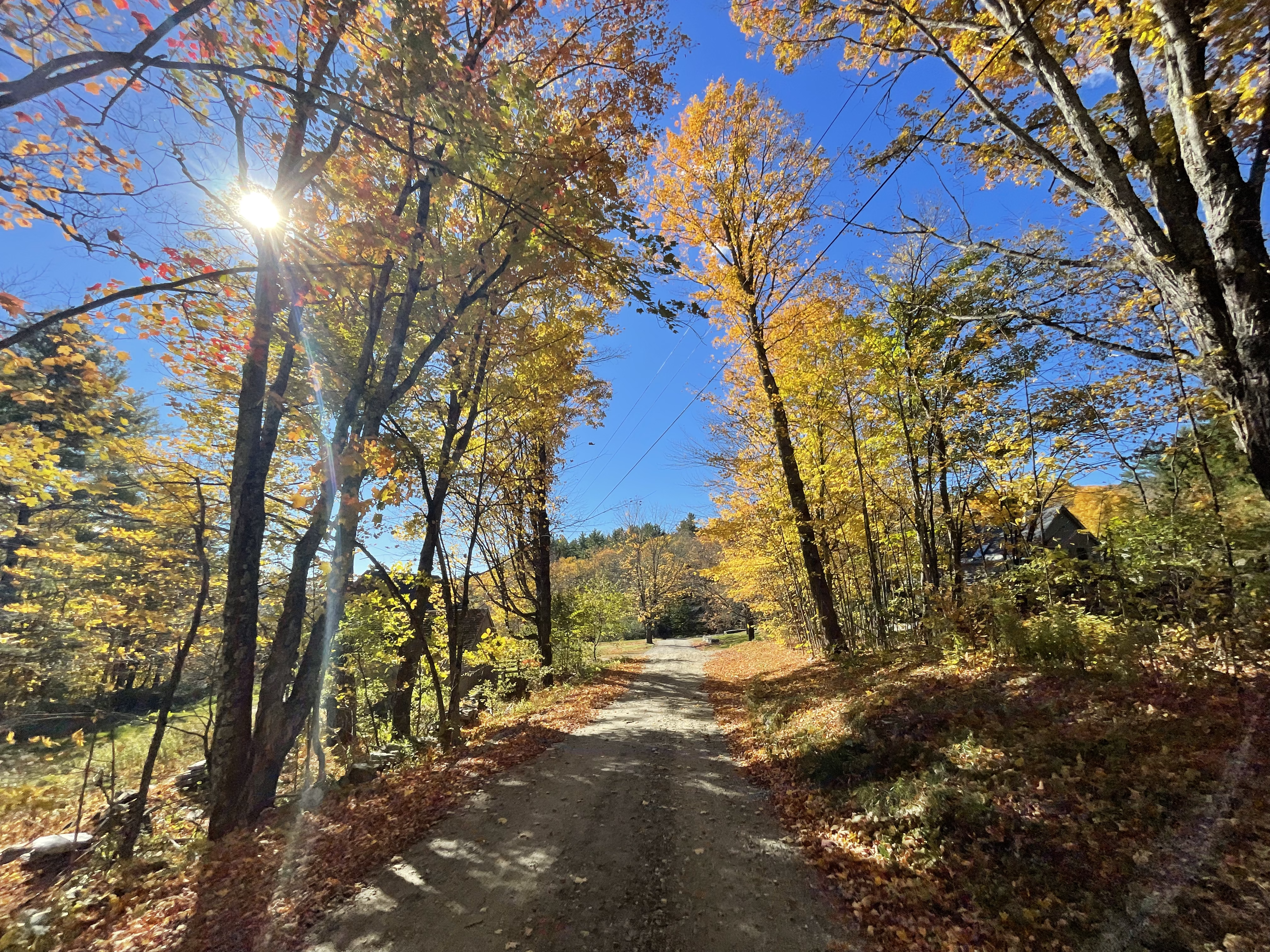
Feeling invigorated by ruddy autumnal leaves, crisp air and the seasonal spirit of transition, I ventured to rural Vermont during October Break with my friend Nate Dexter ’26 for a week-long journey walking between small towns in the south of the state. My foray into New England was an uncharacteristic expression of adventure for me—having hardly left the Tri-state area in two decades as a New Yorker, I have been apprehensive about the remote northern reaches of our country (actually, about anywhere above the Catskills). Contemplating trips to Rhode Island and Maine led to moments of startling home-bodiedness, often changing my travel itinerary to a jaunt to the Jersey Shore. My comfort zone has always been close to the vital rhythm of New York City’s liveliness, the plurality of identities its residents hold and the ubiquity of places to get overpriced cappuccinos. The American northeast—generally a space with vast stretches of unremitting nature—is antithetical to the world I have known. However, two weeks ago, I gathered my courage and determined to bravely strike into the rural vastness of southern Vermont. My objective was to survey the multicolored foliage on foot, crest many a rolling hill and enjoy some bucolic cattle-grazing scenes on the roadside. Each evening, we would lodge at increasingly quaint bed and breakfast inns, and each day, we would hike a loop from Chester up to Ludlow and back to Chester once again. In six days, we would clear approximately 80 alpine miles of brisk mountain air and fronds crinkling on northerly gusts.
We began the trip by driving to Vermont from Poughkeepsie through the expanse of upstate New York, listening to ’70s soft rock hits and talking excitedly about eating home-cooked breakfasts at cozy inns. I rode shotgun, owing to my NYC-native inability to drive. Biding our time driving through the countryside on Route 279, we eventually passed through a highway-side copse known as Hoosick and then into Arlington, Vermont. Immediately, it seemed as though I was immersed in an alien world, scenic and strange compared to what I had known in the Hudson Valley. I was overwhelmed by the sprawling mountain ranges of Green Mountain National Forest, which conceal Bennington College’s inconspicuous campus, and excited as we took the steady curve of a parclo exchange and rattled off the freeway, descending into the tiny town of Chester. Home to a population just above 3,000, Chester is essentially comprised of one street lined with kitschy gift shops, storefronts purveying confections and cutesy ranches, namely the cloyingly adorable Buttonwood Farm replete with idyllic stable horses meandering through verdant pasture. Chester, a mythologized cross-section of small-town Vermont life, was fitting as both the inception and terminus of our walking tour. We checked into the imposing Fullerton Inn, plunked our backpacks down in a drafty and dated but quaint second-floor room, went to the nearby pub for sustenance and conked out.
After waking the next morning, grabbing breakfast and setting off on our first day of walking, I felt my truest expectations for a New England trek realized. We embarked through the Arcadian Lover’s Lane Road, a stretch of sharp inclines dotted with leafy explosions of yellow and red that slope down to the sleepy town of Andover (population: 568). The walk was genuinely breathtaking, taking us through dense rows of beautifully faded greenery and winding through shaded hilltops and sun-soaked clearings of pastureland. Eventually, we arrived at the Inn Between and Which Ways, an adorable Gothic inn nestled halfway between Chester and neighboring Londonderry. Recognizing our feet hurt from walking all day, the inn owners, Brigitte and Jason, lent us electric bikes to ride out for dinner. Seizing the opportunity, we briskly carved swathes across backroads powered by motor bicycles and descended from a stunning mountaintop vista into Weston, a quintessentially patriotic small town. Beautiful sterling white Colonial architecture and an adorable storefront purveying fudge and cider give the town its character, completed by a village green with Civil War cenotaphs and bunted U.S. flags that adorn an adorable central gazebo. We lazed in Weston, ate fudge, enjoyed the genuine beauty of the small town and then rode to neighboring Londonderry before returning our electric bikes to the Inn Between. Innkeeper Brigitte made maple popcorn, and we played Trivial Pursuit: Totally 80s in the ancient refurbished inn’s living room, originally erected in 1826 as a stagecoach holding.
The rest of our time walking across Vermont passed swiftly, spent trudging up imposing mountain ways, passing through small farms and country stretches, reading roadside plaques about Finnish immigration to Vermont, running from wild farm dogs patrolling the roads, traversing byways and passing small ranches. We ventured to the small town of Ludlow, nestled in a valley with Okemo Mountain towering overhead, where I feasted at The Killarney pub and sampled hard ciders (there is a reason why Citizen is the most prolific Vermont cider; it is simply the best). We moved on to tiny Tyson, a hamlet seated on the banks of stunning Echo Lake (which surprisingly does not echo). From Tyson, we trekked across the long-disused Old Notch Road, an old carriage road overgrown with brush and felled trunks winding through a gorge. Our journey across Old Notch spit us out at the crest of a tiny mountain to the town of Plymouth Notch, the home of 30th U.S. President Calvin Coolidge. The entire town is a historic site, home to the estates of the Coolidge and Wilder families preserved in their stately 20th-century Colonial styles. We got a fine brie named Ballyhoo from Plymouth Cheese Company (founded by Calvin’s father, John) and then jaunted to Calvin’s gravesite, an inconspicuous series of gravestones where Cal rests along with his son, wife and father.
Coolidge became a patron saint and lodestar for us on this trip. Known for his laconic demeanor, which spawned his nickname ‘Silent Cal,’ he was, from all we have learned, a bit of a dork: always sporting a nerdy bowler cap and cane, a little ungainly and awkward, staunchly Puritanical and committed to small-government laissez-faire politics. Balancing the stoic countenance of a politician with daily pancake breakfasts, Coolidge was thrust into the highest office of government after Warren G. Harding’s death, forced to ascend to new heights as he took his oath in his Plymouth Notch homestead during the early hours of the morning on Aug. 3, 1923. In a sense, I felt like him; thrust into a new experience entirely unlike my own, although I could not possibly be taciturn or laconic given the moment-to-moment breathtaking vistas we were stumbling upon. The day after we visited Plymouth Notch, on the way from Tyson to neighboring Proctorsville, we sauntered through South Reading and saw simply the most breathtaking view of the Green Mountains on a shady forest lane. A black cow, grazing on a mountainside pasture set against the alpine vista, mooed absently at us and tipped its head back down to tear free a mouthful of grass. I could not help but laugh with delight at the sheer strangeness of the scene compared to my usual setting in the city: cooing pigeons on guano-spackled pavement and waterbugs skittering over porcelain.
After a final night in Proctorsville’s adorable Golden Stage Inn, a bed-and-breakfast tied into an apiary and goat farm, we returned to Chester. The walk back was frosty and bittersweet. Over our time here, the chill had set in, and winter gales had blown free all the peak foliage from the trees overhead; many times while walking, winds would wend across trees and shake from them their plumes of autumn color. The seasons shifted during our time here, and we journeyed back through the final few miles of walking, 10 degrees colder than when we initially arrived. We had a final coffee on the Chester Common, soaked in the vibes of our last moments in small-town Vermont, and set off back to New York State.
I arrived at Poughkeepsie Train Station with a ticket to Grand Central in hand and a fundamental whiplash that shifted my perception. After six days in gurgling creeks and the gently whimpering winds of a New England wilderness, returning to the Empire State was overwhelming. The modernity, commotion and crowds of people on Lexington Avenue felt comparatively strange, and helped me understand just what wondrous things I had avoided outside the city for so long. Though happy to be back home, I am excited to return to a place I never thought I would find so intriguing, formative or instructive. Between the seemingly opposed chaotic urbanity of New York City and the quiet rurality of Vermont, there are areas of parity: their expansiveness, meditative nature and plurality of beauties to behold.