
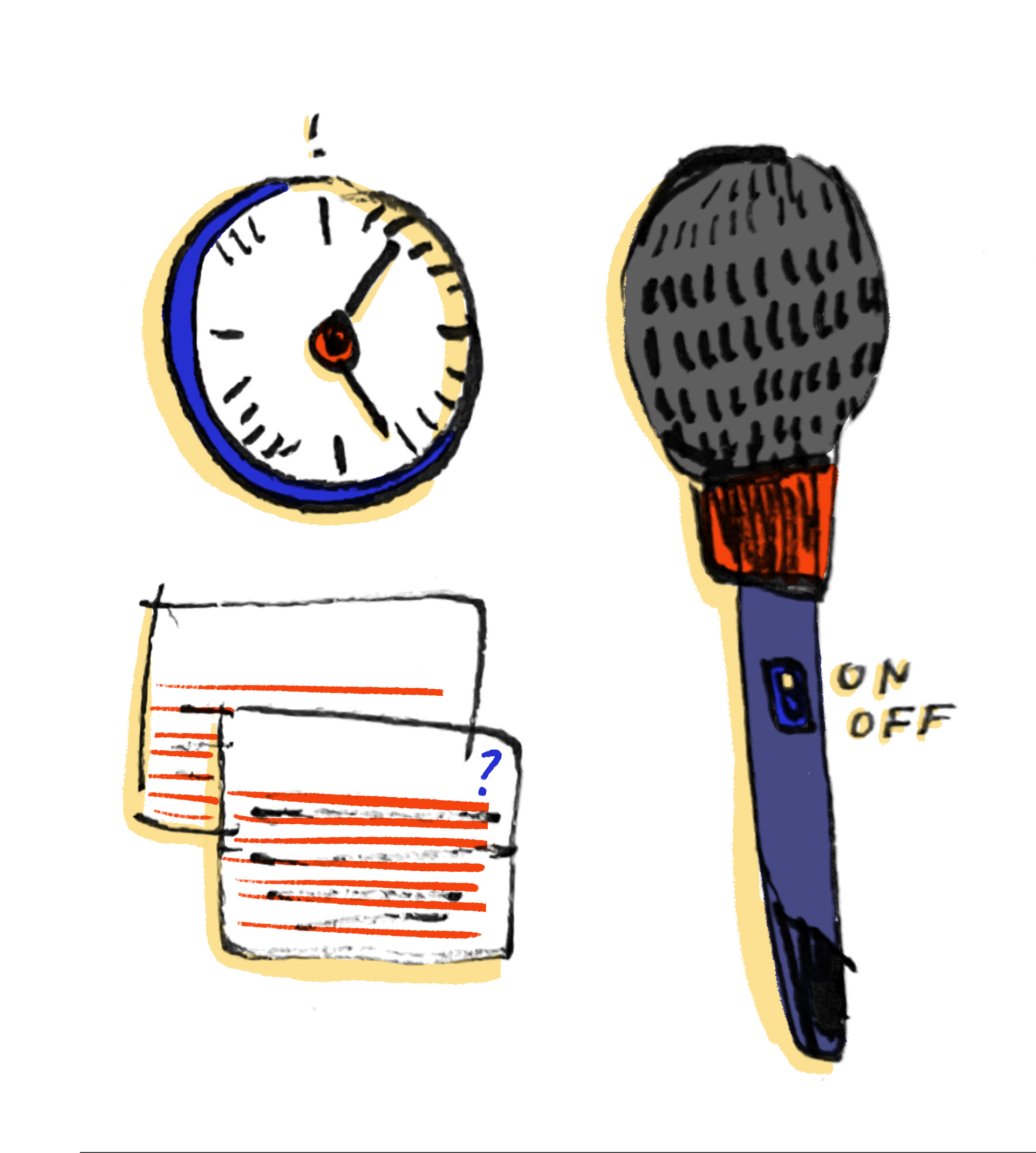
Here are two seemingly oppositional ideas about last week’s debate: It was a hotbed of false and misleading statements, question dodging and blatant disregard of debate etiquette. Another idea: This election cycle has had really good debates, at least on the level of moderation. Vital (and miraculously agreed upon) debate rule changes this election cycle, such as the removal of a live audience and the commitment to turning off candidates’ mics when the other candidate is talking, has produced a calmer atmosphere with less downtime and greater organization. This begs the question, though: If this debate cycle was particularly well executed while also not very good, then what still needs to be improved? A few things need some major rethinking: further commitment to mic cutting, better time management, centering moderator questions and expanding fact-checking.
As much as current Vice President Kamala Harris postured before the debate about wanting mics on the whole time, I think both sides privately acknowledge this to be an inferior state of affairs for both the candidates and the audience. Cutting off mics while another candidate is speaking was an effective step towards eliminating candidates talking over each other, something which has grown rampant in recent cycles, but has yet to affect how candidates treat debate moderators. This includes behaviors like brute-forcing more talking time or generally arguing with the moderator.
Here are some basic rules about mic control that I think could alleviate these problems: when a candidate runs out of the time, their mic should soon after be cut off (a sort of discretionary “soon”). When a moderator is fact-checking a candidate, that candidate’s mic should be off. When the moderator is assessing rebuttals, the candidates’ mics should be off. Candidates should be able to indicate the desire to respond to the other candidate’s statement without needing to verbalize it, such as by raising their hand or pressing a button. Essentially, a candidate’s mic should only be on when they are requested by the moderator to speak.
While keeping better control over mics solves many of my gripes with moderation, clarifications and rethinking of how time is actually managed are important for improving debates. I have heard of a proposed chess clock model for managing time, most notably endorsed by the Annenburg Public Policy Center in 2016, where candidates are given equal time per topic and take turns running down their own clocks, commenting in whatever ways they deem fit. Something about that model, though, just feels too clunky and gamified to me. For one, I think this format could still lead to cross-talk and awkward transition moments when the time is passed to the other candidate. Furthermore, the model also seems to imply that a candidate can take control of the floor at any time and interrupt another candidate. Besides, I see there to be too many strategic implications involving time-saving in this method and an overly rigid insistence on equal time. That being said, I am slightly curious about its potential in a multi-candidate, party-specific presidential debate.
For two-candidate presidential debates, I personally prefer a Major League Baseball pitch clock sort-of format where you have a set amount of time to answer a moderator question, and if you run out of it, you get penalized and your mic gets cut off. That being said, I see potential for a chess clock model in the rebuttal period, where it seems pretty clear that moderators do not know what the hell to do with it and do not make it abundantly clear how much time is allotted for rebuttals and how many rebuttals are allowed. This has led to candidates far too often saying, “Wait, I need to respond to that!” when moderators clearly wanted to move on. While I think better time management would be huge for better debate moderation, it does not necessarily ensure that candidates will stay on topic.
One of my biggest questions after the debate: Why were the moderator questions not on screen? It is clear that candidates often do not attempt to answer the moderator questions that are prompted, and thus the audience might easily forget what the candidate was even asked about. Not including the question itself on screen is devaluing its importance such that the moderator is essentially saying to the candidate, “Ramble about Israel/abortion/immigration/whatever topic for two minutes.” What is the point of moderators asking questions if the live broadcast devalues them so severely?
It is not unheard of for debate programs to display questions; sports talk show questions do this all the time (but admittedly with lower stakes). One could go even further and include a quote from the candidate’s response under the onscreen question, either to highlight a point from their response that answers the question or highlight the ways they have obviously avoided answering it, though the subjectivity involved in such quoting is less than ideal.
It is, of course, not new that candidates in a presidential debate avoid answering moderator questions, and it is likely that such an idea would not be successful in changing candidates’ behavior. Still, I would like to see a proactive effort by the network to prioritize questions, instead of having the moderator sheepishly add at the end of a candidate’s response, “Um, actually the question was about ____.”
Another thing that might improve candidate answers is the expansion of live fact-checking. Two surprising moments of live fact-checking did occur during the debate on the topics of *checks notes* eating cats and post-birth abortions, which was a step in the right direction. Live fact-checking could clearly be expanded upon, though. As someone who reads live fact-checking sites during the debate, I often think a lot is missed by the average viewer. What if after each of the two commercial breaks, a brief segment was run that went through important instances of misleading and false claims said by candidates during the debate? That could make a huge difference for the literacy of general debate watchers.
All of these changes across mic control, time management, question prioritization and fact-checking would generate massive improvements on the quality of debate moderating and candidate responses. There are a few concepts I did not address here that also matter—questions like “What if the questions were asked by a non-journalist?” that don’t personally intrigue me, or “What about those weird town hall debates?” (Ken Bone, anyone?), which is too much of a sidetrack to get into here. This by no means a complete look at debate reform, but merely a few ideas to consider.
Lastly, though, I would be foolish to not acknowledge the fact that decisions about debate format require agreements from both candidates and that many of these recommendations are perhaps unrealistic to that end. My real concern about debate moderation is that the 2028 election will potentially backslide on debate rules like having an audience and cutting off mics. And while I will feel great anguish if that is the case in 2028, I will always be able to look back at 2024, and think, “Hey, at least they tried.”